


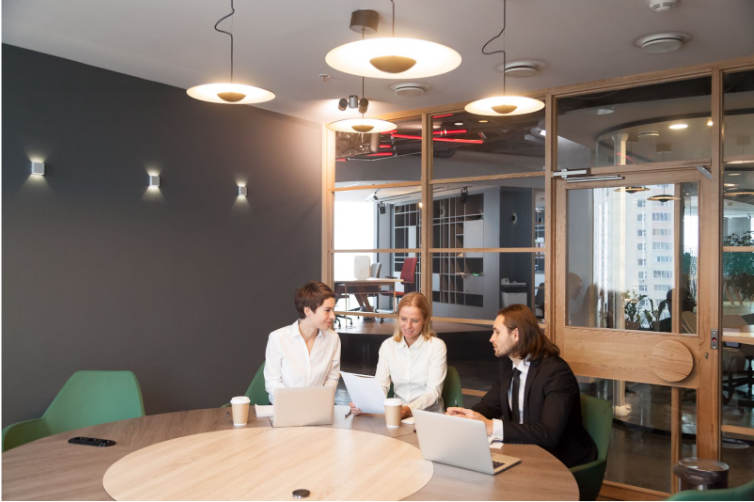
The idea of the “third place” has become very popular in the evolving office landscape. The first place is the home, the second is the formal workplace, while the third place is an informal zone bridging the gap between work and leisure. Cafes, lounges, and social hubs within corporate environments have then become integral to modern commercial interior design to satisfy the need for a “third place.” Rather than being viewed as extra, these areas are increasingly considered essential components that support worker well-being, teamwork, and general productivity. Effective integration of third places into workplace environments is changing how employees engage with their surroundings and with each other.
The Role of Third Places in Modern Offices
The shift towards hybrid work and flexible office layouts has increased the demand for well-designed third places. Traditional offices, built around rows of desks and private offices, no longer address the expectations of today’s workforce. Modern employees seek variety, comfort, and spaces where they can connect informally. Third places are catalysts for spontaneous collaboration, creativity, and social interaction, which are difficult to achieve in formal meeting rooms or open-plan workstations. Cafes, lounges, and breakout areas are strategically positioned to break the monotony of standard workspaces while encouraging employees to move freely and engage in diverse activities throughout the day. These spaces are not merely recreational; they are business tools supporting knowledge-sharing, innovation, and staff retention.
Key Principles in Designing Effective Third Places
Creating successful third places for interior design corporate projects requires balancing functionality, comfort, and brand identity. Third places must be versatile enough to accommodate solo work, small group discussions, casual meetings, and social interactions. Comfort is critical; ergonomic seating, soft lighting, and acoustics must be thoughtfully planned to create an inviting atmosphere without compromising work efficiency. Integrating technology is also essential, as employees often require access to power outlets, screens, and high-speed internet in these areas. In addition, third places should visually align with the organisation’s brand, reflecting its culture and values through material selection, colour palettes, and overall aesthetics. This approach enhances the employee experience while reinforcing brand identity internally.
ALSO READ: The Influence of Colour Psychology on Cafe Design
Integrating Third Places into Corporate Layouts
Successful integration of third places within workplace layouts relies on strategic positioning. These spaces are often placed along natural circulation paths or at intersections of key departments to maximise visibility and usage. Placing cafes and lounges near reception areas or central atriums encourages employees, clients, and visitors to engage with the space, creating a more welcoming corporate image. In larger offices, decentralised third places are recommended to prevent overcrowding and to make these spaces accessible to all teams. Proper zoning is vital; third places should be close enough to working zones to remain functional but distinct enough to foster a psychological shift from task-oriented spaces to relaxation and socialisation areas.
The Business Case for Investing in Third Places
Investment in third places is not just a design trend; it has tangible business benefits. Studies have shown that well-designed third places contribute to employee satisfaction, productivity, and retention. From an interior design perspective, third places serve as high-value spaces that enhance the overall usability of an office without requiring significant additional square footage. Flexible furniture arrangements allow these spaces to adapt to various functions throughout the day, optimising the return on design investment. Furthermore, they support wellness initiatives by offering areas where employees can recharge mentally and physically, directly impacting morale and performance. The presence of attractive third places can be a decisive factor for organisations competing for talent, especially younger professionals.
Conclusion
Nowadays, it’s common practice in commercial interior design to incorporate cafes, lounges and social areas into offices. As organisations prioritise employee experience and flexible work environments, third places will continue to play a pivotal role in shaping the future of workplace design. Their ability to foster collaboration, creativity, and well-being positions these spaces as essential components of any interior design strategy focused on long-term success.
Contact JD & Partners and let us transform your office into a space where work, collaboration, and well-being come together seamlessly.
